Build Your Own Metal Detector - Is It Worth It?
For many metal detecting enthusiasts, the idea of building a metal detector at home is just as fascinating as using one in the field.
Build Your Own Metal Detector: Is It Worth It?
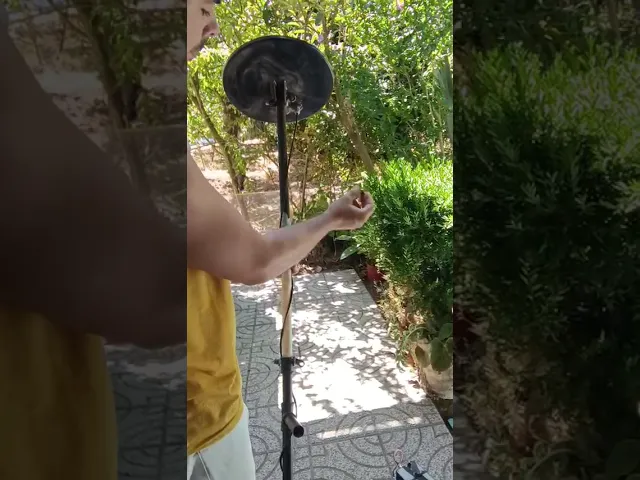
For many metal detecting enthusiasts, the idea of building a metal detector at home is just as fascinating as using one in the field. While modern commercial detectors offer impressive performance straight out of the box, building your own detector can be an excellent way to understand what is actually happening inside the machine.
You don't necessarily need to be an electronics engineer. What you do need is curiosity, patience, a willingness to experiment, and an interest in electronics.
Why Build a Metal Detector Yourself?
The biggest advantage of a homemade detector is not necessarily saving money. In fact, a good DIY detector can sometimes cost more than a basic commercial detector.
The real advantage is knowledge.
When you build a detector yourself, you can learn how its different sections work:
- Search coil design
- Oscillators and signal generation
- Pulse induction (PI) circuits
- Very low frequency (VLF) detection
- Signal amplification
- Filtering and noise reduction
- Analog-to-digital conversion
- Microcontrollers and digital signal processing
- Ground response and mineralization
- Target identification
Instead of simply knowing that a detector produces a particular response, you begin to understand why it produces that response.
That knowledge can also make you a better detectorist. Understanding ground balance, electromagnetic interference, coil behavior and target signals can help you interpret what your commercial detector is telling you.
DIY vs. Commercial Metal Detectors
Commercial detectors have one enormous advantage: they are ready to use.
Manufacturers spend years developing their electronics, coils, firmware and signal-processing algorithms. A modern detector can contain sophisticated technologies that would be extremely difficult for a hobbyist to reproduce from scratch.
A homemade detector, on the other hand, usually involves compromises.
| Homemade Detector | Commercial Detector | | ------------------------------------------ | --------------------------------------- | | Excellent learning experience | Ready to use | | Can be inexpensive for basic designs | Usually more expensive | | Fully customizable | Limited customization | | Easy to experiment with electronics | Optimized and professionally engineered | | Can be designed for a specific purpose | Often designed for broad applications | | Performance depends heavily on the builder | Consistent performance | | May require considerable troubleshooting | Usually supported by the manufacturer | | Can evolve as your knowledge improves | Firmware and hardware are largely fixed |
For someone who simply wants to find coins, relics or gold as efficiently as possible, buying a good commercial detector will usually be the more practical choice.
But if your objective is to understand how metal detectors work, the calculation changes completely.
You Don't Have to Start With an Advanced Detector
One of the biggest mistakes beginners can make is trying to build an extremely sophisticated detector as their first project.
There are many much simpler circuits that can demonstrate the basic principles of metal detection.
A basic oscillator-based detector, for example, can introduce you to the relationship between a search coil, inductance, frequency and a metal target.
From there, you can move toward more sophisticated designs involving:
- PI technology
- VLF technology
- Microcontrollers
- Digital sampling
- Automatic ground balancing
- Multiple operating frequencies
- Digital signal processing
The important thing is to build progressively.
Your first detector doesn't have to compete with a $2,000 commercial machine. Its job is to teach you something.
The Search Coil Is Part of the Experiment
One particularly interesting aspect of DIY metal detectors is the search coil.
Commercial detectors generally come with carefully engineered coils, but when building your own detector, you have the opportunity to experiment with coil design.
Changing the coil's:
- diameter
- number of turns
- wire gauge
- inductance
- geometry
- winding configuration
can significantly change the behavior of the detector.
You can therefore turn the coil itself into an electronics experiment.
For enthusiasts interested in gold prospecting, relic hunting or deep targets, this can become particularly interesting because coil characteristics and detector electronics have to work together.
There Are Many DIY Detector Designs Online
Fortunately, you don't have to start from zero.
The internet has a large community of electronics enthusiasts who have been experimenting with metal detectors for decades. Numerous forums, blogs and electronics communities contain schematics, PCB layouts, coil information, troubleshooting discussions and modifications.
You can find projects ranging from very simple circuits built with a handful of components to considerably more advanced detectors using microcontrollers and digital signal processing.
Some projects are educational prototypes. Others have been developed and modified by hobbyists over many years.
The quality of these projects varies, however. A circuit appearing on a forum does not necessarily mean that it will perform like a commercial detector.
That's part of the learning process.
You may have to build it, test it, discover that it doesn't work as expected, measure the signals with an oscilloscope, modify the circuit and try again.
The Real Challenge: Troubleshooting
Building the circuit is often only half the battle.
Metal detectors are sensitive electronic instruments. Problems with grounding, shielding, coil construction, power supplies, electromagnetic interference or component tolerances can produce unexpected behavior.
This is where having some knowledge of electronics becomes extremely valuable.
A multimeter is a good starting point. An oscilloscope can become extremely useful as projects become more sophisticated.
Instead of simply asking:
"Why doesn't my detector work?"
you gradually learn to ask:
"What signal should I have at this point in the circuit, and what signal am I actually getting?"
That change in thinking is perhaps the most valuable part of the entire DIY experience.
The Disadvantages of Building Your Own
There are, of course, significant disadvantages.
Performance
A homemade detector may have substantially less sensitivity, stability or discrimination capability than a modern commercial detector.
Modern machines benefit from years of engineering, carefully designed coils, sophisticated filtering and extensive software development.
Time
Building a detector can take many hours—or much longer if you start modifying the design.
If your main objective is finding targets, those hours might be better spent detecting.
Reliability
A commercial detector is designed to survive repeated use in the field. A homemade prototype may be considerably more fragile.
Cost
DIY does not automatically mean cheap.
Once you add a PCB, components, coil materials, enclosure, connectors, batteries and test equipment, the final cost can approach or even exceed that of an entry-level commercial detector.
Learning Curve
Some projects require a reasonable understanding of electronics. If you have never worked with inductors, oscillators, transistors, operational amplifiers or microcontrollers, the first few projects can be challenging.
But that challenge is also what makes them rewarding.
The Best Reason to Build One
Perhaps the best reason to build a metal detector is simple:
You want to know how it works.
If you enjoy taking things apart, experimenting with circuits, winding coils, changing components and investigating unexpected results, building a detector can be an extremely rewarding hobby.
And the knowledge doesn't have to stop with metal detectors.
The same skills can lead to experiments involving inductors, sensors, electromagnetic fields, analog electronics, embedded systems and digital signal processing.
You may start by building a simple metal detector and eventually find yourself designing your own coil, writing firmware for a microcontroller and analyzing target signals on an oscilloscope.
That's the real advantage of DIY.
You aren't simply buying a device that finds metal.
You're learning how to build the technology that makes it possible.
Start Simple, Experiment, and Keep Learning
If you're considering building your first detector, don't be discouraged by the sophistication of modern commercial machines.
Start with a simple design. Build it. Test it. Understand every part of the circuit. Then improve it.
There is a huge amount of information available in electronics forums and metal detecting communities, from basic beginner circuits to advanced PI and VLF projects.
You will probably encounter circuits that don't work perfectly, outdated designs, conflicting opinions and projects that require considerable modification.
That's normal.
The goal isn't necessarily to build the world's best metal detector.
The goal is to understand, experiment and improve.
And once you understand the fundamentals, you may find that building your own detector is considerably more interesting than simply buying one.
Want to explore DIY metal detector projects? Browse the Metal Detecting Lab for more articles about detector electronics, search coils, pulse induction, VLF technology, microcontrollers and experimental metal detecting equipment.